Thinking about how to start a visa consultancy business? Demand for honest, organised immigration help keeps growing — students applying abroad, families reuniting, professionals chasing work permits. But clients trust you with their passports, savings and futures, so the agencies that last are the ones that start with the right foundations, not just a nice office and a Facebook page.
This step-by-step guide covers choosing a niche, licensing, registration, pricing, the systems to build before your first client, and how to win those first clients. It's written for new founders and for experienced counsellors going independent.
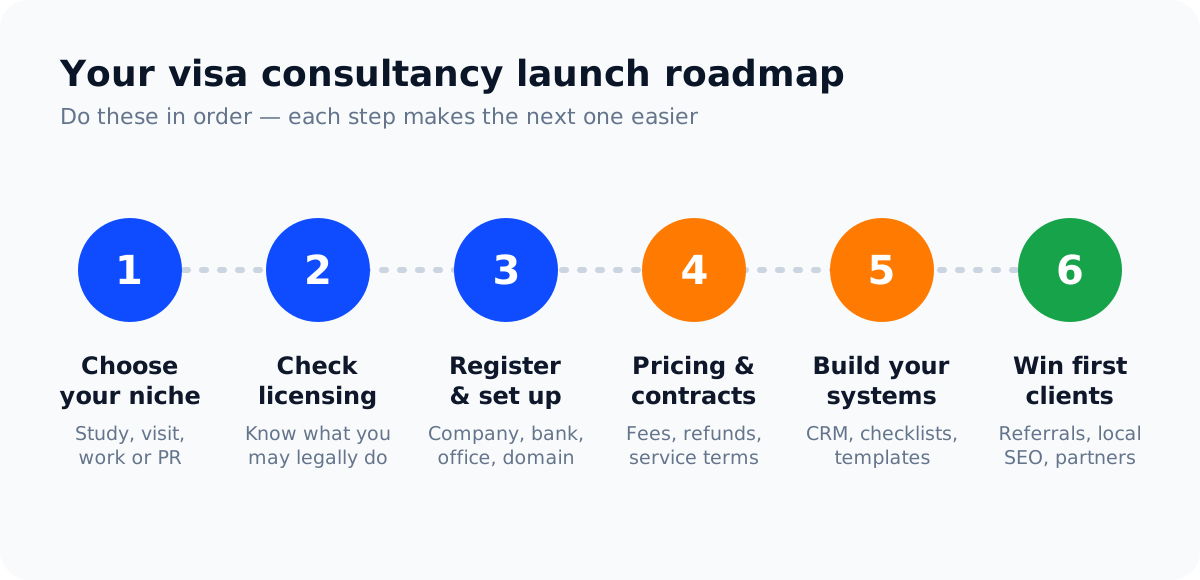
Step 1: Choose your niche
"We do all visas for all countries" sounds safe but makes you forgettable. Most successful consultancies start narrow and expand later. Common niches include:
- Study abroad — university admissions plus student visas for the UK, Canada, Australia, the US or Europe.
- Visit visas — tourist, family visit and business visit applications, often high volume and lower fee.
- Skilled migration and work permits — longer, more complex files with higher fees.
- Family and spouse visas — document-heavy cases where organisation and empathy matter.
Pick a niche where you already have knowledge or contacts, and where you can explain the process better than anyone else in your city. A clear niche also makes your marketing far easier, as we explain in 15 ways to get more clients for your visa consultancy.
Step 2: Check licensing and legal requirements
Rules differ a lot between countries, and they also depend on which country's immigration system you advise on. A few well-known examples:
- Canada: paid advice on Canadian immigration is limited to lawyers, Quebec notaries and Regulated Canadian Immigration Consultants (RCICs) licensed by the College of Immigration and Citizenship Consultants.
- United Kingdom: immigration advisers must be regulated — usually through the Immigration Advice Authority (formerly the OISC) — unless they are exempt, such as solicitors.
- Australia: people giving immigration assistance generally need to be registered migration agents.
- United States: only licensed attorneys and accredited representatives may give immigration legal advice.
- Recruitment for jobs abroad: many sending countries — Pakistan and India among them — require a separate government licence to recruit workers for overseas employment.
Study-abroad consultancies that only handle university admissions often fall under different rules, and many universities require their recruitment agents to complete training and sign an agency agreement. Before you take a single fee, find out what you are legally allowed to do where you operate and for which destinations. This article is general guidance, not legal advice — confirm the current rules with the relevant regulator.
Step 3: Register your business and set up the basics
- Register the company in the structure that suits your country (sole proprietorship, partnership or limited company).
- Open a business bank account and keep client money separate from personal money from day one.
- Get professional indemnity insurance if it is available and expected in your market.
- Set up a professional identity: a domain name, branded email addresses, a simple website and a Google Business Profile.
- Choose an office setup — a small office builds trust with walk-in clients, but many consultancies start with a shared workspace and video calls.
Step 4: Define your services and pricing
Write down exactly what each service includes before you advertise it. A good service description lists the visa type, what you do (assessment, document review, form filling, submission, follow-up), what you don't do, and the expected timeline.
Three pricing rules will save you a lot of disputes:
- Separate your service fee from government and third-party fees such as visa, biometric and courier fees.
- Use a written agreement that covers scope, payment milestones and your refund policy.
- Never guarantee a visa outcome. Decisions belong to the immigration authority, and guarantees are misleading — in many places they are also unlawful.
For a full breakdown of pricing models and milestone payments, read how visa consultants should price services and get paid on time.
Step 5: Build your systems before clients arrive
This is the step most new agencies skip — and regret six months later, when there are forty active files spread across WhatsApp chats, email and a spreadsheet only one person understands. Set up these systems while you still have time:
- A case management system with stages, owners and deadlines. See our buyer's guide to choosing a CRM for immigration consultants.
- Document checklists for each visa type you offer. Start from our visa document checklist template.
- An online inquiry form on your website so leads arrive with the details you need.
- Templates for your service agreement, assessment report, welcome email and common client updates.
- A data protection routine: where documents are stored, who can access them, how long you keep them and how clients give consent.
Systems are cheapest to build when you have five clients and most expensive when you have fifty.
Step 6: Win your first clients
Your first clients usually come from trust, not advertising:
- Your existing network — friends, family, former colleagues and past students. Ask them for introductions.
- Partnerships with English test centres, coaching academies, colleges and travel agents who meet your future clients first.
- A Google Business Profile with accurate opening hours, photos and your first genuine reviews.
- Free information sessions on intakes, scholarships or visa changes — in person or online.
- Helpful content that answers the questions people ask you every day.
Startup costs to plan for
Costs vary widely by city, but these are the categories almost every new consultancy budgets for:
| Category | What it covers | Tip |
|---|---|---|
| Registration & licensing | Company registration, professional licences, training | Budget time as well as money — approvals can take weeks |
| Office | Rent, furniture, internet | A shared workspace keeps early costs low |
| Brand & website | Logo, domain, website, business email | A clear, fast website beats a fancy slow one |
| Software | CRM, accounting, video calls | Choose tools with free trials and monthly billing |
| Marketing | Local ads, events, printed material | Track the source of every inquiry from day one |
| Insurance | Professional indemnity, office insurance | Check what your regulator expects |
Common mistakes new consultancies make
- Promising guaranteed visas to win clients — it damages trust and invites complaints.
- Mixing government fees into a single "package price" so clients can't see what they pay you for.
- Working without written agreements, especially for refunds.
- Running everything on personal WhatsApp, so records leave when staff leave.
- Ignoring follow-up — most inquiries need more than one contact before they become clients.
Frequently asked questions
Do I need a licence to start a visa consultancy?
It depends on where you operate and which countries you advise on. Some destinations strictly regulate who may give immigration advice; admissions-only work may follow different rules. Check with the regulator before charging fees.
Can I start a visa consultancy from home?
Many consultants start from home or a shared workspace and move to an office once they have steady clients. What matters most is professional communication, secure document handling and clear agreements.
How do visa consultants make money?
Mainly through service fees paid by clients. Study-abroad agencies may also earn commissions from partner institutions under formal agency agreements. Be transparent about both.
How long does it take to get the first clients?
With an existing network and active partnerships, many consultants sign their first clients within weeks. Building a steady flow from search and referrals usually takes several months of consistent work.
When you're ready to set up your systems, try VisaPilot CRM free for 7 days — cases, document requests, invoices and reminders are ready to use on day one.
Run your visa agency from one dashboard
Cases, documents, deadlines, invoices and a client portal — built for immigration consultants. Try VisaPilot CRM free for 7 days.
Start free trial or book a demo →