Setting visa consultant fees is uncomfortable for many agency owners. Charge too little and you work long hours for thin margins; charge too much without explaining why and clients walk away. Then there's the second problem — actually getting paid, on time, without awkward reminders. This guide covers common pricing models, how to set your fee, how to present it, and how to collect payment smoothly.
Common pricing models for visa services
| Model | How it works | Best for | Watch out for |
|---|---|---|---|
| Flat fee per service | One price for a defined service, e.g. a visitor visa application | Standard, repeatable visas | Scope creep on complex files |
| Tiered packages | Basic, standard and premium levels of support | Agencies serving different budgets | Packages that are hard to compare |
| Milestone payments | Fee split across stages of the case | Longer, higher-value cases | Unclear milestone definitions |
| Consultation fee | Paid assessment, often credited against the service fee | Filtering serious inquiries | Explaining what the client receives |
| Hourly or retainer | Time-based billing or monthly fee | Corporate clients, ongoing compliance | Clients worried about open-ended costs |
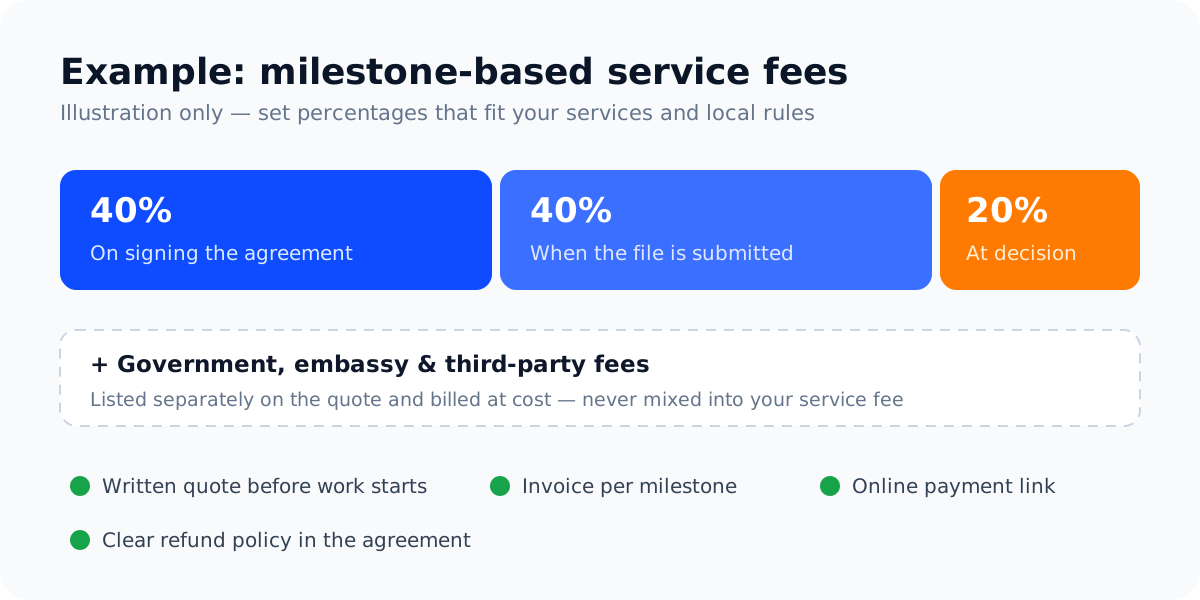
Many agencies combine models — for example, a paid consultation credited against a flat service fee that is collected in milestones.
How to set your fee
- Know your cost per file. Estimate the hours a typical case takes — consultation, document review, forms, submission, follow-up — and multiply by what an hour of your team's time really costs, including rent and software.
- Adjust for complexity and risk. Refusal histories, multiple applicants or tight deadlines mean more work and responsibility.
- Look at the market, but don't race to the bottom. The cheapest agency rarely wins the clients you want. Compete on clarity, speed and service.
- Price the value, not just the form. Clients pay for expertise, organisation and peace of mind — explain those in your proposal.
Always separate government and third-party fees
Visa application fees, health surcharges, biometrics, courier charges, translations and test fees are not your service fee. List them separately on your quote and invoice, pass them through at cost, and keep receipts in the case file. Transparency here is one of the biggest trust signals you can send — and it prevents disputes when a government fee changes.
Put it in writing: quotes and service agreements
Every client should receive a written quote before work starts, followed by a service agreement. A clear agreement includes:
- Scope — exactly which services are included and which are not.
- Fees and milestones — amounts, due dates and what triggers each payment.
- Government and third-party fees — listed separately and paid at cost.
- Timelines and responsibilities — what you'll do and what the client must provide, by when.
- Refund policy — what's refundable at each stage and why.
- No guarantee of outcome — decisions belong to the immigration authority.
- Data and consent — how documents are stored and used.
A clear quote also converts better. After a consultation, sending a professional quote the same day — with the recommended route and an "accept" option — shows organisation and keeps momentum. See more conversion ideas in 15 ways to get more clients for your visa consultancy.
Invoicing and getting paid on time
- Collect the first milestone before work begins. It confirms commitment and covers your initial effort.
- Issue one invoice per milestone with a clear due date and a short description of the work it covers.
- Add an online payment link to every invoice. The easier it is to pay, the faster you're paid.
- Remind politely and promptly. A friendly note on the due date, then a follow-up a few days later.
- Link payments to progress. Make it clear in your agreement that the next stage starts once the related milestone is paid.
- Review unpaid invoices weekly alongside your case pipeline.
Clients rarely refuse to pay a clear invoice for work they understand. Most late payments come from unclear amounts, unclear timing or an inconvenient way to pay.
Handling refunds and disputes
- Decide your refund rules in advance and put them in the agreement — for example, consultation fees non-refundable, later milestones refundable only for work not yet done.
- Document your work — notes, communications and completed tasks show what was delivered.
- Respond calmly and quickly. A fair, documented answer usually ends a dispute; silence escalates it.
Showing fees in the client portal
When clients can log in and see their invoices, what's paid and what's due — with a "Pay now" button — payment becomes part of the normal client experience rather than an awkward conversation. Read more about it in our guide to immigration client portals.
How VisaPilot CRM handles quotes and invoices
In VisaPilot you can build a service quote from standard line items (consultation, application preparation, document review, government fees and more), set discounts, tax and validity, and send it to the client, who can accept or decline it online. Invoices are created per client or case with line items and tax, tracked through draft, sent, paid and overdue, printable or downloadable as PDF, and can include a secure online payment link. Unpaid invoices also appear in the Action Center, and expenses are tracked alongside revenue. If you're still tracking payments in a spreadsheet, our comparison of WhatsApp and Excel vs a visa agency CRM shows what changes.
Frequently asked questions
How much do visa consultants charge?
Fees vary widely by country, visa type and complexity, so there's no single number. Calculate your cost per file, check local market rates and price for the value and certainty you provide.
Should government fees be included in my package price?
It's better to list them separately and charge them at cost. Clients see exactly what they pay you for, and changes in official fees don't eat into your margin.
Is it normal to ask for payment upfront?
Yes. Most agencies take a first milestone or consultation fee before starting work, with the rest collected at defined stages.
What should my refund policy say?
State what's refundable at each stage, how refunds are calculated and how long they take. Keep it simple, fair and in writing — and explain it before the client signs.
Send professional quotes and get paid faster with online payment links. Start your free 7-day VisaPilot CRM trial or see plans and pricing.
Run your visa agency from one dashboard
Cases, documents, deadlines, invoices and a client portal — built for immigration consultants. Try VisaPilot CRM free for 7 days.
Start free trial or book a demo →