
Study abroad files are some of the most complex in the immigration world. One student can apply to five universities in two countries, juggle conditional offers, pay a deposit, wait for a CAS or CoE, apply for a visa and still need pre-departure help — often with parents asking for updates along the way. A CRM for study abroad consultants keeps all of that organised so counsellors can focus on advice instead of admin.
This guide breaks the student journey into eight stages, shows what to track at each one, and explains how to manage intakes, documents and communication at scale.
Why study abroad files are different
- Many applications per student — several universities, sometimes in more than one country.
- Hard intake deadlines that can't be moved if paperwork is late.
- Conditional offers with conditions to meet, such as final results or English scores.
- Money milestones — application fees, tuition deposits, proof of funds.
- Two audiences — the student and, very often, the parents who pay.
- A visa at the end that depends on everything before it being correct.
The eight stages of the student journey
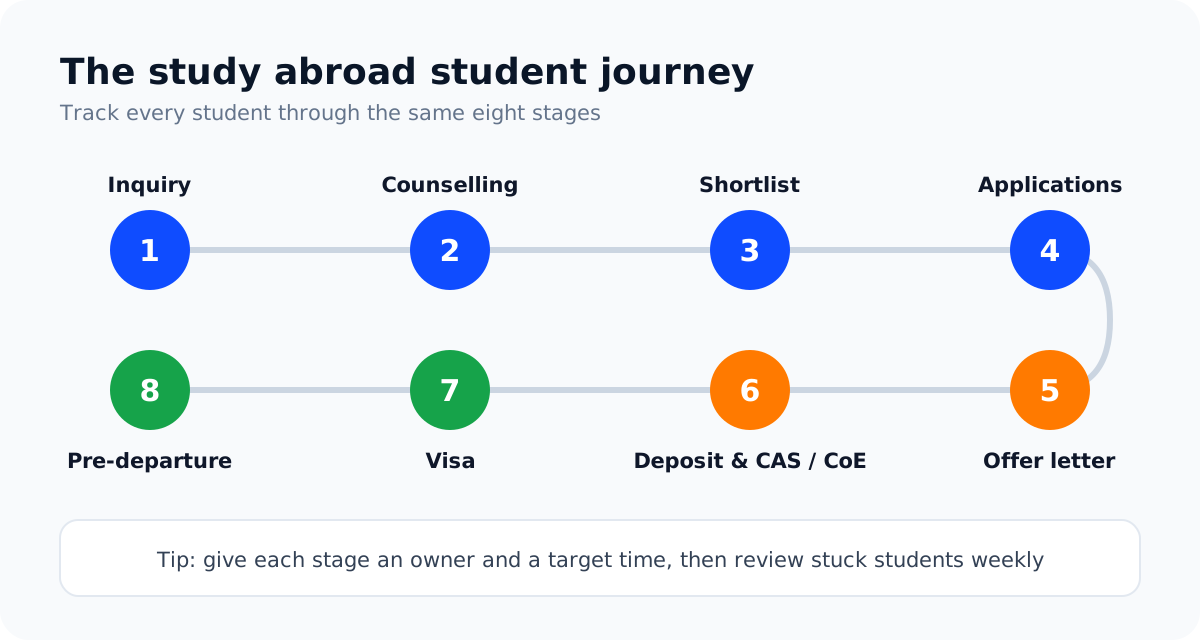
| Stage | What to track | Common bottleneck |
|---|---|---|
| 1. Inquiry | Source, preferred country, course level, budget, intake | Slow first reply |
| 2. Counselling | Academic history, test scores, goals, shortlist criteria | Missing transcripts or scores |
| 3. Shortlist | Universities and courses, entry requirements, fees | Student undecided |
| 4. Applications | Each application's status, deadline and application fee | SOP and references not ready |
| 5. Offer | Conditional or unconditional, conditions to meet, acceptance deadline | Conditions not met in time |
| 6. Deposit & CAS / CoE | Deposit paid, acceptance document requested and received | Proof of funds issues |
| 7. Visa | Documents, appointment, submission and decision dates | Last-minute document gaps |
| 8. Pre-departure | Accommodation, travel, insurance, arrival briefing | Late bookings |
The stage names may differ by destination — for example, a CAS for the UK, a CoE for Australia or an I-20 for the US — but the structure is the same. Give each stage an owner and a target number of days, then review the students who are stuck every week. The same method works for all visa types, as explained in our guide to visa application tracking.
Managing intakes and deadlines
Intakes drive everything in study abroad. A simple routine:
- Keep an intake calendar with application deadlines for each partner institution and country.
- Work backwards from each deadline — when must the SOP be final, when must references arrive, when must funds be shown?
- Tag every student with their target intake so you can filter "September intake, documents incomplete" in seconds.
- Start visa preparation early — gather financial documents while waiting for offers, not after.
An example intake planning timeline
Counting back from the intake makes deadlines visible early. Timings vary by country and institution, so treat this as a template to adjust:
| Before intake | Focus |
|---|---|
| 10–12 months | Counselling, shortlist, English test booking |
| 8–10 months | Statements of purpose, references, first applications |
| 6–8 months | Remaining applications, scholarship applications, follow up on offers |
| 4–6 months | Accept an offer, meet conditions, prepare proof of funds |
| 2–4 months | Deposit, CAS / CoE / I-20, visa application |
| 0–2 months | Visa decision, accommodation, travel and pre-departure briefing |
Documents for student files
Student files are document-heavy. Typical items include passports, academic transcripts and certificates, English test results, a statement of purpose, reference letters, financial documents and sponsor letters, and, for the visa, the acceptance document and any medical or tuberculosis test required. Start from our visa document checklist template and adapt it per destination.
Watch expiry dates closely. English test results are usually accepted for a limited period (commonly two years), offers have acceptance deadlines, and passports must remain valid for the full stay. Record these dates on the student's case so they're flagged before they cause a problem.
Keeping students and parents informed
Parents often pay the fees and want regular reassurance. Instead of answering the same questions on three different chats:
- Give the student portal access to see their stage, outstanding documents and invoices.
- Agree with the family who receives official updates.
- Send a short update at every stage change — offer received, deposit paid, visa submitted.
- Log important calls in the case so any counsellor can pick up the conversation.
Tracking institutions and commissions
If you work with partner institutions, track which university each enrolment belongs to and the expected commission. Custom fields on the case — for example "Institution", "Intake" and "Expected commission" — make it easy to report on enrolments per partner and spot payments that haven't arrived.
Growing your student pipeline
Study abroad agencies grow fastest through partnerships with English test centres and schools, seminars before each intake, and referrals from successful students. Our article on getting more clients for your visa consultancy lists 15 ideas that work particularly well for student recruitment.
How VisaPilot CRM fits a study abroad agency
VisaPilot gives each student a case with a pipeline stage, an owner, tasks, notes and documents in one place. You can add custom fields for intake, institution or commission, send document requests with an upload link and due date, record passport, visa and English-test expiry dates, and schedule counselling appointments. A public application form on your website brings new inquiries straight into the system, and on Growth and Agency plans students can follow their case in the client portal.
The best study abroad agencies are not the ones with the most students — they're the ones where no student ever falls through the cracks.
Frequently asked questions
Can a general CRM work for study abroad consultants?
It can track leads, but you'll need heavy customisation for applications, offers, deposits and visas. A CRM designed for immigration and student files gives you those stages and documents from the start.
How do we track multiple university applications for one student?
Keep one case per student and record each application (institution, course, status, deadline) in it, using custom fields or notes, so the full picture stays in one place.
What should we do when a student's English score is about to expire?
Record the result date as soon as you receive it and set a reminder well before it expires, so the student can retake the test or submit applications in time.
Should parents have their own login?
It depends on your policy and the student's consent. Many agencies give the student the portal login and send parents scheduled updates.
Manage every student from first inquiry to visa approval in one place. Start your free 7-day VisaPilot CRM trial or book a demo tailored to study abroad agencies.
Run your visa agency from one dashboard
Cases, documents, deadlines, invoices and a client portal — built for immigration consultants. Try VisaPilot CRM free for 7 days.
Start free trial or book a demo →